Stop Curating, Start Circulating: Where Creative Careers Actually Get Built
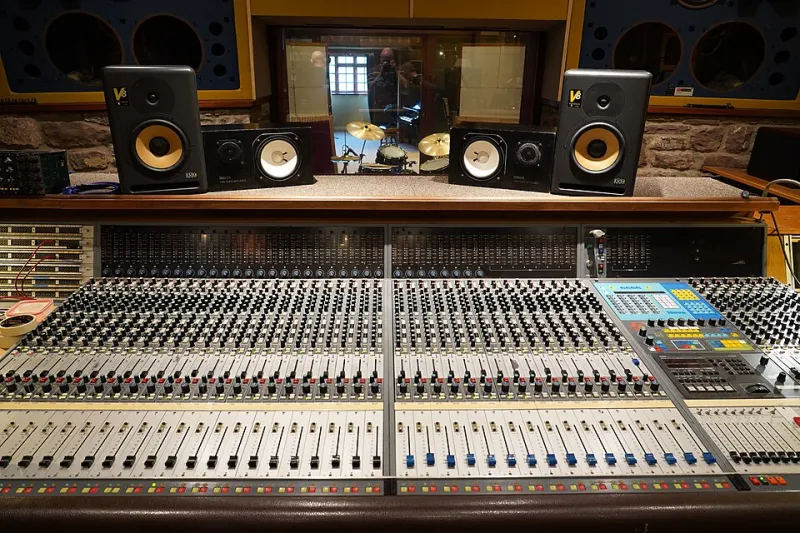
Photo: Steve Knight from Halstead, United Kingdom, CC BY 2.0, via Wikimedia Commons
I spent three months redesigning my portfolio once. Three months. New case studies, tighter copy, a hero image I still kind of love. And you know what changed in my career because of it?
Nothing. Not one thing.
Meanwhile, a sloppy experiment I threw together on a weekend — never posted to my site, just shared in a group chat with a couple of collaborators — turned into a project that paid my rent for half a year.
That gap taught me something I keep relearning: the work that builds your career usually doesn't live on your website.
The Museum Problem
Think about what a portfolio actually is. It's a museum of finished things. Carefully lit, properly labeled, frozen in time. Museums are lovely. But nobody's career was launched by a museum wing.
Yet most of us treat the portfolio as the center of gravity. We pour our energy into the showcase — the place where work goes to rest — while the living work, the stuff in motion, gets almost nothing.
Here's the uncomfortable math. A polished portfolio gets looked at by hiring managers, maybe a prospective client who already found you through a referral. That's it. The audience is tiny, intentional, and already halfway convinced. You're decorating the waiting room of a decision that's mostly been made.
The work that actually compounds? It's distributed. It's messy. It shows up in places you didn't plan.
Work Wants to Travel
I've started thinking about creative work with a distribution mindset instead of a destination mindset. A destination mindset says: this piece belongs on my site, in my case study section, formatted correctly. A distribution mindset asks a better question: where else could this work live, and who could it meet there?
That weekend experiment? It could have been:
- A write-up in a newsletter for people in my niche
- A talk at a local meetup — the kind they host at every coworking space in Austin, Portland, and Nashville
- A raw file handed to a collaborator who'd take it somewhere I never would
- A post in a Slack community where three people say "wait, how did you do that?"
Each of those placements puts the work in front of people in a different context — people who aren't evaluating you, just encountering you. And encounters are where opportunity actually starts.
The Unshared Archive Is Killing Your Momentum
Most creators I know have a graveyard. A folder, a drive, a notes app full of experiments that never saw daylight. We tell ourselves we're saving them for when they're "ready."
Ready for what? The museum?
Here's a challenge: pull one thing out of that graveyard this month and give it away. Not publish it formally — give it away. Send it to someone doing adjacent work. Offer it to a podcast that needs a visual. Turn it into a workshop exercise for a local class. Unfinished work is often more interesting to other creators than finished work, because they can see themselves in it.
The feedback loop alone is worth it. But the side effects are where the magic is: the collaborator you didn't know you needed, the referral from someone who saw your process and thought of you when a gig crossed their desk.
Conversations Are Work Too
There's a category of career-building that doesn't produce artifacts at all, and we systematically undervalue it. The 20-minute call with someone a year ahead of you. The DM that turns into a co-working session. The conference hallway conversation — yes, the one your introvert brain dreaded — that turns into your next client.
This is work. It's just work that leaves no trace on your website.
If your entire creative practice funnels into the portfolio, you're optimizing the least leveraged part of your professional life. A portfolio closes conversations. Distributed work and real relationships open them.
A Practical Rebalance
I'm not saying burn your portfolio down. It still needs to exist — it's the receipt, the proof, the thing people check when they're ready to trust you. But try this split for the next quarter:
- 20% of your effort on the portfolio. Enough to keep it honest.
- 40% on experiments you share imperfectly, in progress, in public.
- 40% on circulation — conversations, collaborations, communities, showing up where your peers and potential clients actually hang out.
Track what comes back. I'd bet the ratio of opportunity to hours looks nothing like what you'd expect.
Your best work shouldn't all live on your website, because your website is where work goes to be admired — and admiration doesn't pay rent. Movement does. Put your work in rooms where things happen.