Ditch the Highlight Reel: How Showing Your Work-in-Progress Builds Real Creative Trust
There's this unspoken rule a lot of creators seem to follow: don't show anyone anything until it's ready. Until it's tight, polished, and impossible to criticize. Until you've quietly solved every problem and can present the finished thing like you conjured it fully formed out of thin air.
I get why that's tempting. Nobody wants to look like they don't know what they're doing.
But here's the thing — that instinct, the one that tells you to hide the rough drafts and the false starts and the "wait, this isn't working" moments, is probably costing you more than it's protecting you.
The Myth of the Effortless Creator
We've all seen the version of success that looks easy. The filmmaker who drops a stunning short film and seems to have just... figured it out. The writer whose debut novel lands a big deal and suddenly everyone acts like they appeared out of nowhere. The designer whose portfolio looks so cohesive and confident that you wonder if they've ever made a mistake in their life.
What we rarely see is the four years of bad short films before the good one. The three unpublished manuscripts sitting in a drawer. The design portfolio that got quietly scrubbed and rebuilt from scratch.
Overnight success is almost always a decade of work that nobody watched.
And yet we keep performing the illusion for each other — sharing only the wins, only the final versions, only the moments where everything clicked. And then we wonder why our audiences feel distant, or why the engagement feels surface-level, or why the work doesn't seem to land the way we hoped.
What Actually Happens When You Share the Struggle
A few years back, a musician named Amanda Palmer gave a TED Talk about asking — specifically, about the discomfort of letting people see you need help. It became one of the most-watched talks in TED history. Not because she had everything figured out. Because she was radically honest about the fact that she didn't.
That's not a coincidence.
When you let people into the uncertainty — the draft that isn't working, the creative direction you abandoned, the idea that seemed brilliant until it completely fell apart — something shifts. People stop seeing you as a finished product and start seeing you as a person. And people connect with people, not products.
This doesn't mean you have to narrate every self-doubt or perform your struggles for sympathy. There's a difference between authentic transparency and manufactured vulnerability. The goal isn't to seem relatable by complaining. It's to share the actual texture of the work — what it really takes, what it actually costs, what you genuinely learned along the way.
The Iteration Is the Story
Here's a reframe worth sitting with: the process isn't the thing you do before the real work. The process is the work.
When Austin Kleon wrote Show Your Work, the central argument was pretty simple — share what you're learning as you learn it, not just the finished thing at the end. That idea resonated with hundreds of thousands of people because it gave permission to be in-progress. To be figuring it out publicly. To treat the journey as something worth paying attention to, not just the destination.
Think about how you actually consume creative work. Do you only care about the final cut of a documentary, or are you also fascinated by the behind-the-scenes footage? Do you only want the finished painting, or are you also drawn to time-lapses of the painting being made? Do you only read the published essay, or do you also love when a writer shares the messy thinking that led to it?
Most of us are obsessed with the how. We want to see inside the machine.
When you share your iterations — the version one that was kind of clunky, the pivot you made halfway through, the moment you almost scrapped the whole thing — you're not exposing weakness. You're giving people something to follow. You're creating a story with stakes.
Practical Ways to Open Up the Process
None of this requires you to be an open book about every creative insecurity you've ever had. But there are some low-pressure ways to start letting the work-in-progress breathe a little.
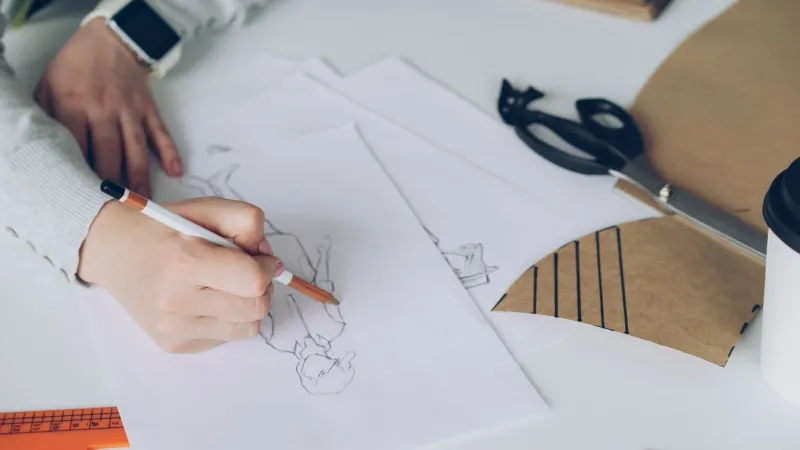
Document as you go. Take a photo of the sketchbook page before you refine it. Screenshot the rough draft before you edit. Save the early version of the design. You don't have to share all of it, but having it means you have the option.
Talk about the decision, not just the outcome. Instead of just posting the finished piece, spend a sentence or two on why you made a specific choice — or why you changed your mind. "I almost went a completely different direction with this" is more interesting than "here's the final thing."
Name the uncertainty when it's real. If you're genuinely not sure how something is going to land, you can say so. "I tried something different with this one and I'm honestly not sure how I feel about it" is a real thing a real person says. It invites a response. It opens a conversation.
Share the failure with the follow-through. The failed experiment is only useful if you also share what you learned from it. The story isn't "I messed up." The story is "I messed up, and here's what that actually taught me about the work."
Perfection Is a Wall Between You and Your Audience
There's a version of perfectionism that masquerades as high standards but is really just fear. Fear of being seen trying. Fear of being caught not knowing. Fear that if people see the rough edges, they'll decide you're not worth their time.
But polished work at arm's length rarely builds the kind of loyalty that sustains a creative career. What builds that is trust — and trust comes from letting people see enough of the real thing to believe that you're genuine.
The creators who tend to build lasting, engaged audiences aren't the ones who seem like they have it all figured out. They're the ones who make you feel like you're in it with them — learning alongside them, watching something actually take shape in real time.
Your best work probably isn't going to come from waiting until you're certain. It's going to come from doing it anyway, sharing it honestly, and being willing to show people what it actually took to get there.
The messy middle isn't the part before the good stuff. For a lot of us, it's where the good stuff lives.